Olaprixa Industrial
China’s top chemical dosing systems are changing how water treatment plants manage accuracy, safety, and operating costs. Modern equipment combines metering pumps, flow sensors, control panels, and automated feedback. These components must work together, not simply operate beside each other.
The practical question is how to optimize chemical dosing efficiency without weakening treatment performance. Engineers usually begin with water analysis, process targets, and chemical characteristics. A dosing pump may look correctly sized, yet poor calibration can create unstable results. Small errors become visible through fluctuating pH, cloudy water, or unexpected chemical consumption.
Details matter.
Reliable systems use corrosion-resistant materials, accurate flow measurement, and scheduled calibration. Operators should inspect injection points, check suction lines, and compare actual consumption with digital readings. Variable-speed control can adjust dosing when flow changes throughout the day. This reduces waste and protects downstream equipment.
Experience remains important. Automation supports decisions, but it cannot replace informed observation. A technician may notice unusual pump noise before an alarm appears. That practical knowledge deserves a place in system design. However, many projects still focus heavily on initial equipment prices. This can be misleading. Lower purchase costs may bring higher maintenance demands, downtime, or replacement risks.
China’s chemical dosing manufacturers offer solutions for municipal water, industrial processing, cooling systems, and wastewater applications. Their quality differs by design, testing, documentation, and after-sales support. Buyers should request performance data, material specifications, calibration records, and clear maintenance guidance. No single configuration fits every plant. Careful assessment, measurable targets, and continuous review create a more dependable path toward efficient chemical dosing.
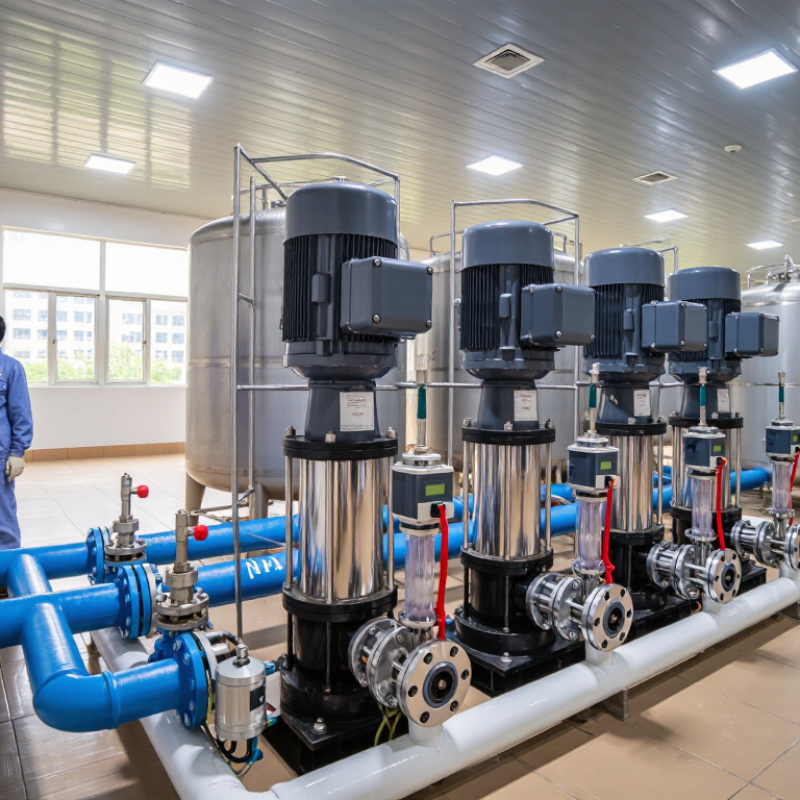
China’s chemical dosing systems support drinking water, wastewater, cooling towers, and industrial production. Common types include diaphragm metering pumps, peristaltic pumps, and screw pumps. Diaphragm pumps suit accurate, pressurized injection. Peristaltic pumps handle abrasive or shear-sensitive chemicals. Screw pumps serve higher-viscosity fluids.
Each system needs a storage tank, mixer, calibration column, injection valve, back-pressure valve, and control panel. The wrong pump can waste chemicals and damage pipelines.
Demand is closely linked to water quality pressure. The WHO and UNICEF Joint Monitoring Programme reported that 2.2 billion people lacked safely managed drinking water in 2022. MarketsandMarkets estimated the global water treatment chemicals market at about USD 27 billion in 2024. These figures explain stronger investment in dosing automation.
Sensors for pH, conductivity, chlorine, and flow can adjust dosage continuously. Variable-frequency drives also reduce unnecessary pumping. U.S. EPA data indicates water and wastewater services consume roughly 4% of national electricity, so efficiency cannot focus on chemicals alone.
Tips: Calibrate pumps weekly during unstable operation. Keep injection points visible and accessible. Test actual flow instead of trusting the display.
Operators should record tank levels, pressure, and chemical consumption. Small data gaps remain common. They can hide over-dosing.
In practice, a simple alarm may protect efficiency better than a complex control screen. The design still needs site testing, because laboratory results rarely match every pipeline condition.
Assessing a chemical dosing system starts with accuracy, not pump size. API 675 is commonly used as a reference for ±1% steady-state capacity accuracy. Verify that figure with a timed, gravimetric test. Collect the chemical in a calibrated vessel. Compare actual mass with the controller’s reading. Small errors matter. A 1% error can become several kilograms each day in a high-flow plant.
Capacity should cover minimum, normal, and peak demand without excessive throttling. Check turndown ratio, chemical viscosity, temperature, suction lift, and discharge pressure. Then compare the result with process targets. For chlorination, WHO guidance commonly uses residual ranges near 0.2–0.5 mg/L, depending on contact conditions and local requirements. Flow-paced control is usually more stable than fixed-speed operation. Still, sensors drift, and clean water does not guarantee clean data.
System performance also depends on repeatability and maintenance access. Review weekly calibration records, alarm history, stroke frequency, pulsation, and injection-point mixing. The U.S. EPA’s 7th Drinking Water Infrastructure Needs Survey estimates a $625 billion requirement over 20 years. That figure reinforces a practical point: reliable operation deserves attention alongside initial capacity. I would not trust a perfect dashboard alone. Manual sampling sometimes exposes a quiet failure. A useful assessment combines instrument data, laboratory checks, operator experience, and documented corrective actions.
China’s top chemical dosing systems depend on careful equipment selection, not pump size alone. I have seen oversized pumps create unstable flow, wasted chemicals, and frequent adjustment work. A diaphragm pump suits many precise applications, while a peristaltic pump can simplify maintenance. Select materials that resist the chemical, temperature, and pressure involved.
Flow sensors should match the dosing range. A sensor designed for high flow may miss small injection changes. Install it near the injection point, where readings can reflect real delivery conditions. Calibration should use a measured container and a timed test. Small errors become expensive over long operating hours. That lesson is easy to overlook.
Controls connect the whole system. A reliable controller can adjust dosage through flow feedback, tank-level signals, and alarm limits. Manual backup control is also valuable during sensor failure or commissioning. Keep control logic simple enough for operators to understand quickly. Record calibration dates, pump settings, and unusual readings. These details support traceability and future troubleshooting.
A practical test begins with clean water before chemical operation. Check flow stability, response time, leakage, and signal accuracy. Then repeat the test under actual operating conditions. The result may expose an inconvenient truth: the selected pump performs well in theory but poorly at low speed. Flexible settings and accessible components often matter more than impressive specifications.
| System Component | Typical Operating Range | Best-Suited Applications | Efficiency Advantages | Key Selection Criteria | Recommended Control Method | Maintenance Focus |
|---|---|---|---|---|---|---|
| Solenoid-Driven Diaphragm Pump | Approximately 0.1–20 L/h; discharge pressure commonly up to 10 bar | Water disinfection, pH correction, corrosion inhibitor dosing, and small treatment skids | Low energy consumption, compact construction, and easy stroke or frequency adjustment | Required flow range, maximum pressure, chemical compatibility, and turndown ratio | Pulse control, flow-proportional control, or 4–20 mA signal | Inspect diaphragm, check valves, injection point, and calibration volume |
| Motor-Driven Diaphragm Pump | Approximately 1–1,000 L/h; pressure commonly 5–20 bar depending on configuration | Industrial water treatment, boiler chemicals, cooling-water programs, and process dosing | Stable metering over wider capacities and better suitability for continuous-duty operation | Capacity range, pressure stability, viscosity, solids content, and duty cycle | Variable-speed drive, stroke-length adjustment, or closed-loop flow control | Check diaphragm condition, gearbox lubrication, relief valve, and pulsation dampener |
| Peristaltic Pump | Approximately 0.01–500 L/h; commonly used at low-to-moderate discharge pressure | Viscous chemicals, slurries, abrasive fluids, and applications requiring fluid isolation | Only the tube contacts the chemical; dry-running tolerance can reduce equipment damage | Tubing material, chemical compatibility, pressure limit, viscosity, and tube life | Variable-speed control with flow feedback or timed batch dosing | Replace tubing before fatigue failure and inspect for swelling, cracking, or flattening |
| Plunger or Piston Pump | Approximately 10–1,000 L/h; suitable for high-pressure service, often above 20 bar | High-pressure process injection, boiler feed chemicals, and specialized industrial systems | High volumetric efficiency and accurate delivery at elevated discharge pressure | Pressure rating, seal compatibility, pulsation control, and liquid cleanliness | Speed control combined with a calibrated flow meter and pressure interlock | Inspect packing or seals, check valves, lubrication, and discharge pressure |
| Magnetic Flow Meter | Typically used for conductive liquids; common accuracy is about ±0.5% of reading | Water-based chemicals, acids, alkalis, and continuous-flow verification | Provides direct feedback to detect under-dosing, over-dosing, blocked lines, or pump wear | Minimum conductivity, liner and electrode materials, straight-pipe length, and flow range | 4–20 mA, pulse output, or digital communication to the dosing controller | Keep electrodes clean and verify zero point, grounding, and signal stability |
| pH Sensor and Transmitter | Typical measurement range pH 0–14; practical accuracy often about ±0.05–0.1 pH | Neutralization, wastewater treatment, chemical preparation, and process-water control | Enables demand-based dosing instead of fixed-rate chemical addition | Temperature compensation, chemical resistance, response time, and process pressure | PID control with high and low alarms, interlocks, and automatic calibration reminders | Clean and calibrate regularly; inspect reference junction and replace aging electrodes |
| ORP Sensor and Transmitter | Common measurement range approximately −1,500 to +1,500 mV | Oxidation or reduction processes, disinfectant control, and cyanide or sulfide treatment | Supports real-time oxidant or reducing-agent control and helps limit chemical excess | Electrode material, reference system, fouling resistance, and process mixing quality | Setpoint control with adjustable deadband, alarm limits, and dosing delay | Clean the electrode, verify reference solution condition, and check calibration response |
| Conductivity Sensor | Range depends on cell constant; commonly from low conductivity water to concentrated brine | Salinity control, chemical concentration monitoring, rinse-water management, and blowdown control | Helps maintain concentration within a target range and reduces unnecessary chemical use | Cell constant, temperature compensation, electrode material, and fouling tendency | Feedback control, limit control, or conductivity-based batch dosing | Remove scale or deposits and verify temperature compensation and cell calibration |
| PLC, Dosing Controller, and HMI | Supports discrete signals, 4–20 mA, pulse inputs, alarms, data logging, and remote communication | Multi-pump systems, water treatment plants, process automation, and centralized monitoring | Coordinates pump speed, sensor feedback, tank level, flow verification, and safety interlocks | Number of I/O points, control logic, communication protocol, cybersecurity, and data needs | PID control, flow-paced dosing, ratio control, batch recipes, and remote supervision | Test alarms and interlocks; back up programs; inspect wiring, calibration records, and trends |
| Storage Tank, Level Sensor, and Injection Assembly | Tank sizing commonly covers several hours to multiple days of chemical demand | Bulk chemical storage, continuous dosing stations, and skid-mounted systems | Prevents dry running, reduces air entry, improves mixing, and supports safer chemical handling | Tank material, chemical concentration, ventilation, secondary containment, and injection pressure | Low-level shutdown, high-level alarm, mixer control, and automatic refill permissive | Inspect tank integrity, suction strainers, foot valves, injection quills, and containment areas |
China’s advanced chemical dosing systems become efficient through disciplined installation, calibration, and control. Pipework should remain short, supported, and accessible for inspection. A small air pocket near the pump head can create unstable flow and false alarms. Engineers should also verify injection-point turbulence, back pressure, and chemical compatibility before commissioning.
Calibration must match actual operating conditions, not only factory settings. Technicians can collect timed discharge samples, compare them with laboratory results, and record deviations in a traceable log. ISO/IEC 17025 principles support reliable measurement practices. The International Energy Agency reported that motor-driven systems consume about 53% of global electricity, so oversized dosing pumps deserve serious review. In variable-flow applications, U.S. Department of Energy guidance indicates that variable-speed control can reduce pumping energy substantially, sometimes by 20–50%.
Automated process control should combine flow feedback, tank-level signals, and low-flow interlocks. A controller can adjust dosing after detecting changes in conductivity, pH, or oxidation-reduction potential. Remote alarms help operators respond before a blocked line becomes a process failure. Still, automation is not magic. Poor sensor placement can produce accurate-looking, useless data. A practical commissioning team should test normal, low-load, and upset conditions, then retune the loop after several days of operation. Small errors remain. That is why calibration intervals should reflect real drift, chemical concentration changes, and maintenance history.
China Top Chemical Dosing Systems: How to Improve Efficiency?
Maintaining dosing systems protects chemical accuracy, equipment availability, and operating budgets. A small calibration error can overfeed chemicals for weeks. According to the U.S. Department of Energy, optimized pumping systems may reduce energy use by 20% to 50%. Although dosing pumps are smaller, their control habits still influence total plant efficiency.
Technicians should inspect diaphragms, check valves, tubing, and injection points during planned maintenance. Look for salt crystals around fittings, pulsation, unusual noise, or a drifting flow rate. A calibrated cylinder test can compare actual output with the controller setting. Keep records of stroke length, frequency, pressure, and chemical concentration. This creates useful evidence, not assumptions. The U.S. Environmental Protection Agency identifies operation and maintenance as major factors in water-system energy performance.
Clean suction strainers before they restrict flow. Remove trapped air from the suction line. Replace worn seals before leakage damages nearby instruments. Storage tanks also need attention. Sediment can enter the pump and change the delivered dose. The Water Environment Federation recommends condition-based monitoring for critical treatment assets, including trend checks and documented inspections. In practice, maintenance schedules often look complete but miss calibration history. That is a weakness. Reviewing chemical consumption against treated-water volume can expose hidden waste. A monthly variance of 3% may deserve investigation, especially when production remains stable. Small corrections matter.
Collect chemical in a calibrated vessel for a timed, gravimetric test. Compare actual mass with the controller reading. Small errors matter.
A steady-state capacity accuracy of about ±1% is commonly used. Verify it through testing, not paperwork alone.
Capacity should cover minimum, normal, and peak demand. Check viscosity, temperature, suction lift, discharge pressure, and turndown ratio.
Usually, yes. Flow-paced control can adjust dosing as water flow changes. However, drifting sensors may still create inaccurate data.
Inspect diaphragms, check valves, tubing, injection points, and suction strainers. Look for salt crystals, unusual noise, leaks, and changing flow rates.
Compare chemical consumption with treated-water volume each month. A 3% variance may deserve investigation when production stays stable.
Instrument dashboards can look normal while dosing quietly fails. Manual sampling may reveal inaccurate sensors or poor injection mixing.
Keep calibration results, stroke length, frequency, pressure, chemical concentration, alarms, and corrective actions. Missing calibration history weakens the assessment.
Remove sediment before it reaches the pump. Inspect tank condition regularly. Clean-looking equipment can still deliver inconsistent doses.
Combine instrument data, laboratory checks, operator observations, and maintenance records. No single measurement is perfect.
China’s chemical dosing systems are designed to deliver precise amounts of chemicals in water treatment, industrial processing, agriculture, and other controlled applications. This overview explains common system types and essential components, including dosing pumps, storage tanks, mixers, sensors, valves, and control units. It also outlines how to assess dosing accuracy, capacity, pressure stability, response time, and overall performance according to process requirements.
To understand how to optimize chemical dosing efficiency, operators should select pumps, sensors, and controls that match chemical characteristics and operating conditions. Proper installation, calibration, flow verification, and automated process control can improve consistency while preventing over-dosing and under-dosing. Regular inspection of tubing, valves, filters, electrical connections, and measurement devices helps reduce chemical waste, unexpected downtime, and operating costs. A structured maintenance plan, supported by performance records and timely adjustments, ensures the system remains safe, reliable, and efficient throughout its service life.
