Olaprixa Industrial
Olaprixa Industrial
Olaprixa Industrial
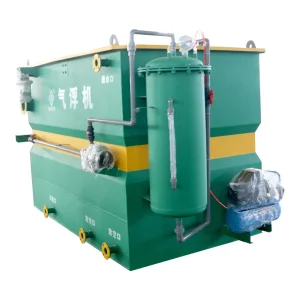
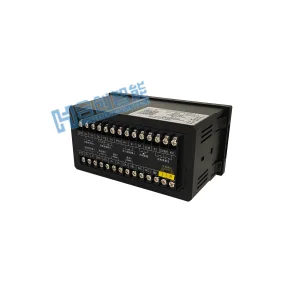
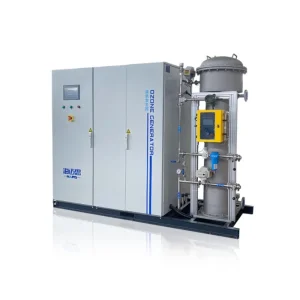
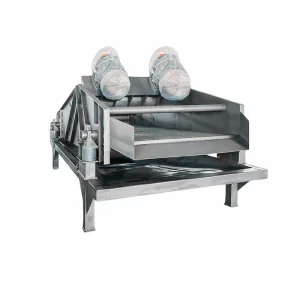
Shanghai Olaprixa Industrial Co., Ltd. is a specialized manufacturer and engineering provider focused on advanced industrial wastewater treatment solutions, integrating sludge processing systems and intelligent chemical dosing technologies. Headquartered in Shanghai, China, the company delivers efficient, reliable, and customized water treatment systems for a wide range of industries including manufacturing, chemical processing, food production, and municipal infrastructure.
Olaprixa offers a comprehensive portfolio covering wastewater treatment equipment, sludge dewatering and thickening systems, and precision chemical dosing units designed to optimize treatment performance and operational efficiency. By combining modern process engineering with automation control, the company ensures stable system operation, reduced environmental impact, and compliance with global discharge standards.
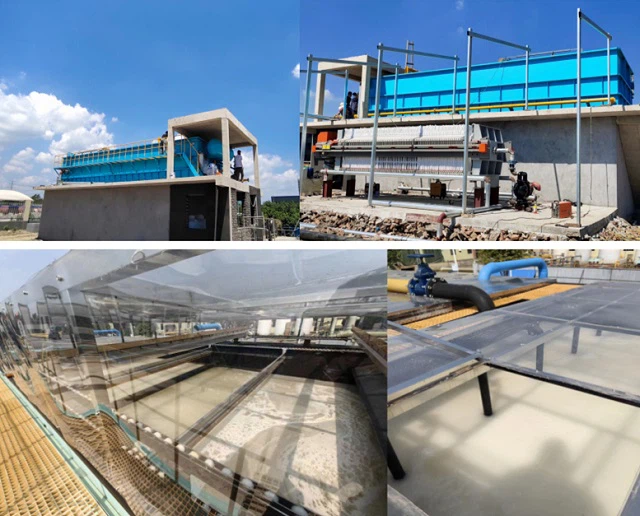
Activated carbon filtration represents one of the most effective and established methodologies for the extraction of micropollutants, dissolved organic compounds, volatile organic carbons (VOCs), halogenated organics, and chlorine from process waters and wastewater effluents. In modern industrial operations, strict regulations govern the discharge of chemical byproducts. This has positioned carbon filtration systems as essential units within tertiary treatment phases. As a premier manufacturer in China, Shanghai Olaprixa Industrial Co., Ltd. builds highly engineered activated carbon plants designed to deliver long-term process stability, high adsorption rates, and minimal operating costs.
Adsorption within carbon filtration relies on the molecular-level interaction between the dissolved contaminants (adsorbates) and the solid carbon matrix (adsorbent). Activated carbon features a massive internal surface area—typically ranging from 800 to 1,500 m²/g—created by a dense network of micropores, mesopores, and macropores. The removal process occurs via physical adsorption, primarily driven by London dispersion forces (Van der Waals interactions), as well as chemisorption, where chemical bonds form between specific reactive organic compounds and the carbon surface functional groups.
Design Parameter Highlight: The performance of an industrial carbon filter depends heavily on the Empty Bed Contact Time (EBCT) and the hydraulic loading rate. EBCT, defined as the volume of the carbon bed divided by the volumetric flow rate, must be carefully designed based on target pollutant kinetics. A typical industrial process water application targets an EBCT of 10 to 20 minutes, while complex pharmaceutical or recalcitrant chemical effluents require up to 30 to 45 minutes to ensure target compound reduction.
Olaprixa’s carbon filtration systems utilize high-activity granular activated carbon (GAC) derived from premium coconut shells or select coal sources. Coconut-shell-based carbons are preferred for water purification due to their high density, low ash content, and highly developed micropore structures, which excel at trapping small organic molecules and chlorine byproducts.
No single technology handles complex industrial wastewater alone. Modern zero-liquid-discharge (ZLD) and advanced recovery schemes require a coordinated process sequence. Olaprixa integrates carbon filtration with multiple process stages to protect media life and maximize overall system uptime:
Over time, carbon beds act as deep-bed filters, trapping fine suspended solids. This buildup increases pressure drop across the bed. If ignored, it leads to flow channeling, fluid bypass, and poor adsorption. Our engineering designs address this by incorporating automated, PLC-controlled backwash valves and air-scour systems. When differential pressure transmitters indicate a set threshold (typically 0.5 to 0.7 bar), or after a predefined runtime, the system initiates a backwash sequence.
The backwash step reverses the flow direction, pumping clean water upward at a velocity designed to expand the carbon bed by 30% to 50%. This fluidization releases trapped particles, shearing away excess bio-growth and flushing it out through the backwash discharge outlet. Air scouring is introduced before or during the water backwash step to break up compacted carbon aggregates and ensure uniform cleaning.
We build our vessels using carbon steel lined with high-grade vinyl ester, stainless steel 304/316L, or fiber-reinforced plastic (FRP). This selection ensures long-term reliability and resistance to corrosive chemical washdowns.
Our control panels use advanced PLCs with 4-20mA inputs and outputs. This allows real-time flow rate tracking, automated backwash cycles, and integration into plant-wide SCADA systems.
Proper flow distribution is critical to prevent channeling. We configure our underdrains with stainless steel wedge-wire lateral systems or nozzle plate arrays to distribute water evenly during filtration and backwash.
Industrial wastewater profiles vary widely by sector. Carbon adsorption parameters must be designed to match these specific chemical compositions to ensure efficient contaminant removal:
Industrial environmental compliance requires systems that meet rigorous international engineering standards. Olaprixa structures its manufacturing processes to align with global benchmarks, ensuring easy integration and permitting for installations worldwide: