Olaprixa Industrial
Olaprixa Industrial
Olaprixa Industrial
In modern manufacturing, process water is not merely a utility; it is a critical raw material. The global shift toward micro-electronics, complex bio-pharmaceutical formulas, and ultra-high-pressure steam generation has transformed the technical requirements for industrial water systems. Deionization (DI) water treatment lies at the heart of this transformation, providing the foundational mechanisms to remove ionic contaminants down to trace parts-per-billion (ppb) or parts-per-trillion (ppt) concentrations. As global manufacturers seek cost-effective, scalable, and highly reliable treatment systems, the role of specialized OEM/ODM Deionization Water Treatment Factories has expanded beyond mere assembly to encompass co-engineering, custom process design, and global compliance administration.
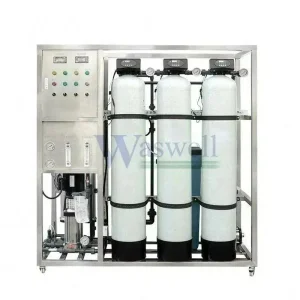
Traditional deionization relies on ion exchange resins—cation and anion exchangers regenerated with acids and alkalis. However, the modern paradigm integrates these with membrane systems like Reverse Osmosis (RO), Ultrafiltration (UF), and chemical-free Electrodeionization (EDI) to construct robust, low-maintenance, and eco-friendly treatment trains. Selecting the correct OEM/ODM partner is paramount for engineering firms and plant owners worldwide to achieve process stability, regulatory compliance, and optimum total cost of ownership (TCO).
The demand for deionized water is subject to localized industrial drivers. In North America and Western Europe, stringent environmental protection regulations (such as the EPA Clean Water Act and EU Water Framework Directives) necessitate wastewater purification and zero liquid discharge (ZLD) systems. Simultaneously, the revitalization of domestic semiconductor fabs (driven by the CHIPS Act and similar global initiatives) has spurred a massive demand for Ultrapure Water (UPW) systems, where DI and EDI technology are indispensable.
In emerging manufacturing hubs across Southeast Asia, Latin America, and India, industrialization is outpacing municipal water infrastructure development. Factories in these regions often draw from raw water sources with high Total Dissolved Solids (TDS) and organic loads. Consequently, they require highly rugged pre-treatment systems—combining automatic polymer dosing, ultrafiltration, and seawater/brackish water reverse osmosis systems—prior to deionization to protect sensitive ion exchange membranes and resins from premature fouling.
Requires ultrapure water with a resistivity of 18.2 MΩ·cm and negligible TOC. Prefiltration and continuous EDI are utilized to maintain uninterrupted supply lines for wafer washing.
Must comply with USP, EP, and JP pharmacopeia guidelines for Water for Injection (WFI). Demands fully automated, sterile precision dosing and stainless steel sanitary piping.
Ultra-high pressure boilers require DI makeup water to prevent scaling and corrosion, avoiding catastrophic turbine failures. System reliability is the primary operating metric here.
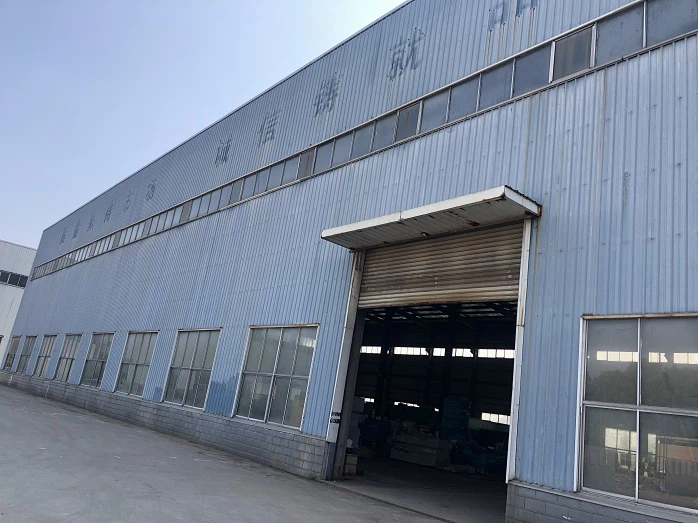
The selection of China as an OEM/ODM manufacturing hub for deionization water systems is driven by unparalleled supply chain integration and manufacturing efficiency. Unlike isolated assemblers, premier Chinese factories operate within dense industrial clusters that provide rapid access to raw materials, precision machining, membrane extrusion, and automated control systems. This proximity reduces procurement lead times, allowing for rapid customization of systems, such as varying screw press dimensions, specialized polymer dosing capacities, or high-capacity EDI configurations.
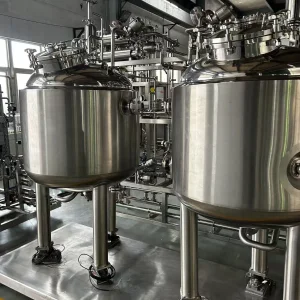
Furthermore, Chinese manufacturing utilizes advanced robotics, CNC precision laser cutters, and automated welding lines. This automation guarantees high-quality welding on stainless steel (SS304/SS316L) pressure vessels, which is critical for preventing microbiological growth and structural corrosion in high-purity water lines. When combined with experienced engineering teams who specialize in scaling systems from pilot plants to 40 TPH municipal or industrial configurations, China exporters offer global buyers an optimal balance of custom engineering agility and cost efficiency.
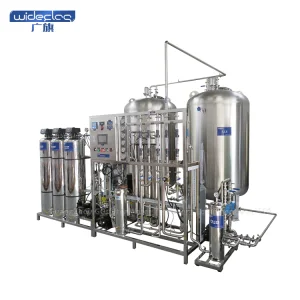
A complete, robust industrial deionization system requires a multi-barrier engineering approach. Relying on a single technology step increases maintenance costs and system vulnerability. A typical advanced hybrid setup engineered by leading OEM partners involves the following critical process units:
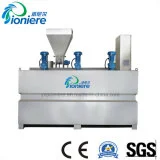
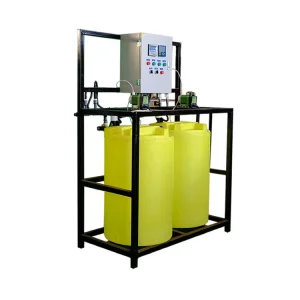
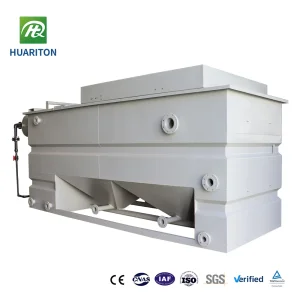
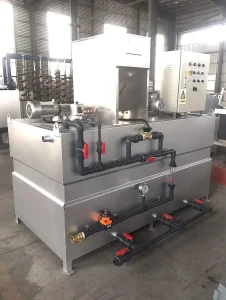
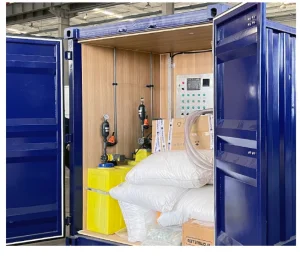
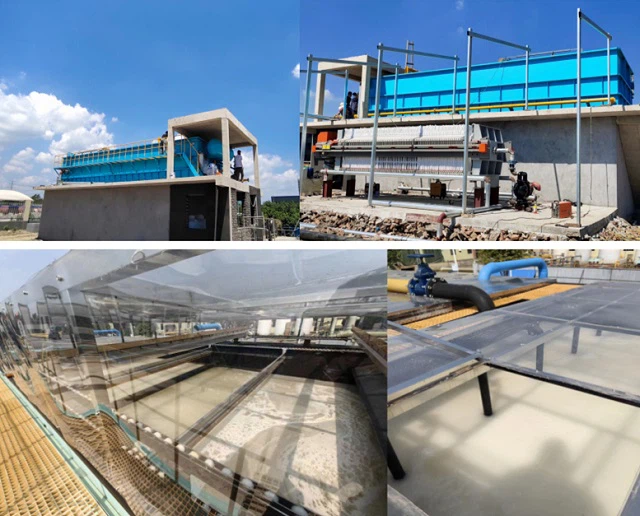
Utilizing Automatic Polymer Dosing Systems to feed high-molecular-weight organic polymers. This destabilizes colloidal suspensions, allowing suspended solids to coalesce. An integrated Dissolved Air Flotation (DAF) or high-efficiency clarifier then removes the bulk solids burden.
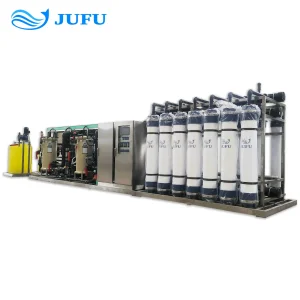
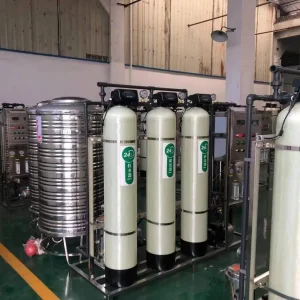
A mechanical barrier filter (such as a 40tph UF system) removes particles down to 0.01 to 0.1 microns. This includes viruses, bacteria, and macro-molecules, ensuring the SDI (Silt Density Index) of the water remains below 3, protecting downstream RO membranes.
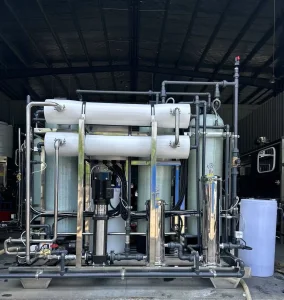
Primary desalting occurs here, removing 95% to 99% of dissolved ions, organics, and silica. In challenging salinity conditions, a dual-pass RO configuration is implemented to reduce the ionic load on downstream polishers.
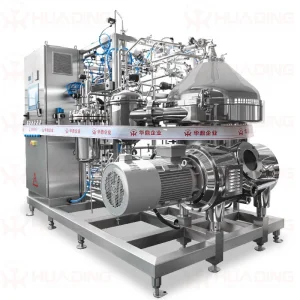
The polished stage. Water passes through alternate cation and anion-permeable membranes under a DC electric field. Resins inside the EDI module are continuously regenerated by hydrogen and hydroxyl ions split from water, eliminating chemical regeneration shutdown cycles.
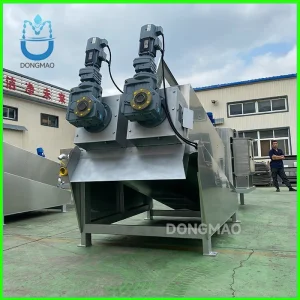
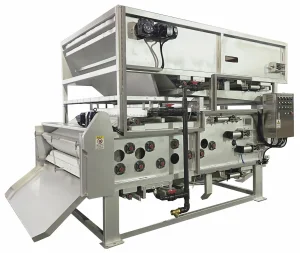
Backwash streams, DAF float, and clarifier underflows contain high concentrations of solids. Utilizing high-torque Multi-Plate Screw Presses allows factories to dewater sludge on-site, reducing waste disposal volume by up to 85% and recovering clean filtrate.
Integrated PLC frameworks (Siemens, Allen Bradley, or Omron) manage the entire cycle. Real-time conductivity, TOC, and flow monitoring ensure that any deviation triggers automatic diversion or chemical adjustments instantly.
Shanghai Olaprixa Industrial Co., Ltd. is a specialized manufacturer and engineering provider focused on advanced industrial wastewater treatment solutions, integrating sludge processing systems and intelligent chemical dosing technologies. Headquartered in Shanghai, China, the company delivers efficient, reliable, and customized water treatment systems for a wide range of industries including manufacturing, chemical processing, food production, and municipal infrastructure.
Olaprixa offers a comprehensive portfolio covering wastewater treatment equipment, sludge dewatering and thickening systems, and precision chemical dosing units designed to optimize treatment performance and operational efficiency. By combining modern process engineering with automation control, the company ensures stable system operation, reduced environmental impact, and compliance with global discharge standards.
With a strong emphasis on customization, Olaprixa provides tailored water engineering solutions based on specific project requirements, from initial consultation and system design to installation guidance and after-sales technical support. Its team of experienced engineers continuously works to enhance system efficiency, reduce energy consumption, and improve resource recovery.
Committed to sustainability and innovation, Shanghai Olaprixa Industrial Co., Ltd. aims to help global clients achieve cleaner production, water reuse, and long-term environmental responsibility through smart and cost-effective treatment technologies.
Purchasing high-purity water treatment systems is a major capital investment. To safeguard operational continuity and ensure long-term ROI, procurement directors and engineering leads should evaluate prospective OEM/ODM exporters against a structured set of technical criteria:
Ensure that all structural components, pipeline manifolds, and pressure vessels come with certified material test reports (MTRs). For high-purity applications, SS316L with electropolishing is preferred over standard SS304 to prevent microbial adhesion.
The control system must support industry-standard communication protocols (Modbus, Profinet, EtherNet/IP) to facilitate integration with the plant's centralized SCADA system. Remote diagnostics and cloud-based telemetry are highly valuable additions.
Insist on Factory Acceptance Testing (FAT) before shipment. Testing protocols should include wet hydro-testing of pressure vessels, electrical loop checks, and helium leak testing for sanitary gas/water lines.